
Solutions
AI & Machine Learning
AI is only useful when it is pointed at a real problem, fed reliable data and operated against clear criteria. We build it that way, in domains where we already understand the data.
Overview
What it is
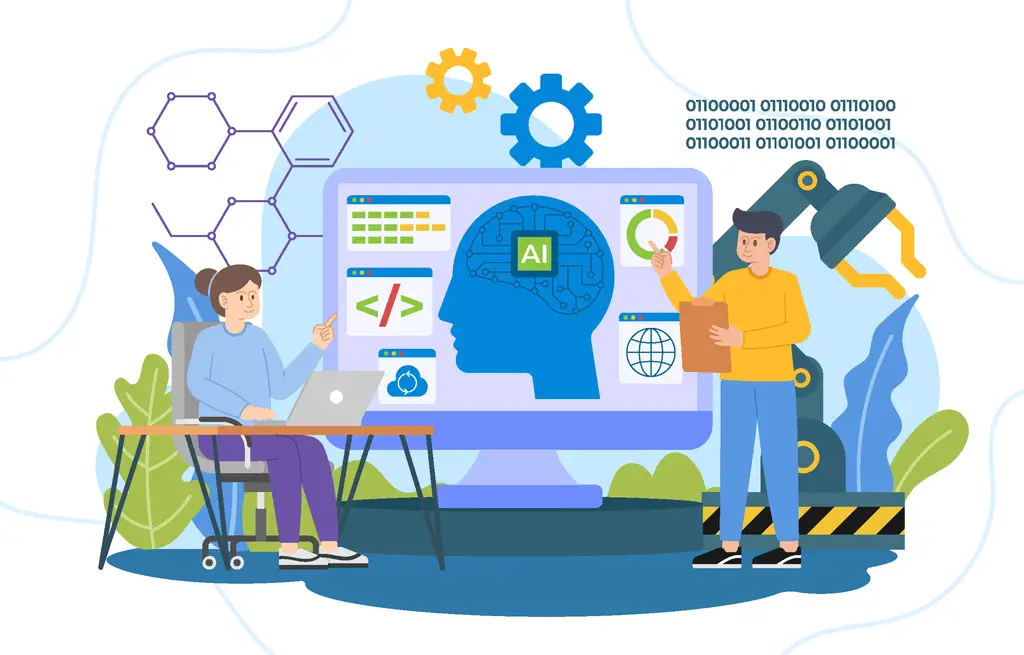
We apply artificial intelligence and machine learning across the full lifecycle: data collection and preparation, model development and evaluation, deployment, and continuous monitoring. Our focus is not on the model in isolation but on the system around it — the data quality, the integration, the human review and the operational controls that make an AI capability dependable.
The problem
Problems we solve
- Models that perform in a notebook but not in production
- Data that is too inconsistent or sparse to train on reliably
- AI initiatives with no clear measure of success or business owner
- Regulatory and ethical obligations that are not addressed until late
- Manual, repetitive processes that resist conventional automation
Capabilities
What we build
Machine learning and predictive models for scientific and operational data
Generative AI and retrieval-based assistants grounded in enterprise knowledge
Synthetic data generation and annotation pipelines
Process mining and AI-enabled workflow automation
AI-powered analytics and decision dashboards
MLOps: deployment, monitoring, retraining and governance
Toolkit
Technologies & capabilities
- Python ML and deep learning frameworks
- Cloud and on-premise model serving
- Vector and feature stores for retrieval and similarity
- Data and ML pipeline orchestration
- Model evaluation, monitoring and drift detection
- Responsible-AI controls and human-in-the-loop review
Who it is for
Designed for
- Life-science, pharmaceutical and healthcare organisations
- Scientific and industrial research teams
- Enterprises modernising data-heavy operations
- Product teams embedding intelligence into software
Why UVJ
Why teams choose UVJ for this
Domain-grounded AI
We apply AI in domains we already understand scientifically and operationally, which is what separates a working system from an impressive demo.
The whole pipeline, not just the model
Data engineering, integration, evaluation, deployment and monitoring are treated as part of one engineering problem.
Responsible by design
Human review, explainability, access control and traceability are built into AI capabilities, particularly where decisions affect people or compliance.
FAQ
Frequently asked questions
Where does UVJ actually apply AI?
In scientific data analysis, laboratory workflows, digital image processing, healthcare analytics, enterprise automation and document-intensive processes. We prioritise domains where the data and the decision are already well understood.
What is synthetic data and why use it?
Synthetic data is artificially generated data that mirrors the statistical properties of real data. It is useful when real data is scarce, sensitive or expensive to label — for example to train or validate models without exposing protected or proprietary information.
How do you keep AI systems trustworthy?
Through data governance, documented model development, evaluation against agreed criteria, monitoring for drift, human-in-the-loop review where decisions matter, and full traceability of inputs and outputs.
Related solutions
Scientific Software
Custom software for instruments, scientific workflows and regulated research environments — built to be validated, auditable and maintainable for years.
Learn moreBioinformatics
Pipeline engineering, analysis tooling and scalable data platforms for genomic, transcriptomic and multi-omic research.
Learn moreData & Analytics
Modern data platforms, pipelines and decision tools that turn operational and scientific data into a dependable reporting layer.
Learn moreLet's engineer what's next.
Tell us about the problem. You will speak with an engineer who understands the domain, not a call centre.